Contact Us
-
Bhagwan Bahal Marga,
Thamel, Kathmandu - +977-9701525176
- trekhimaltour@gmail.com
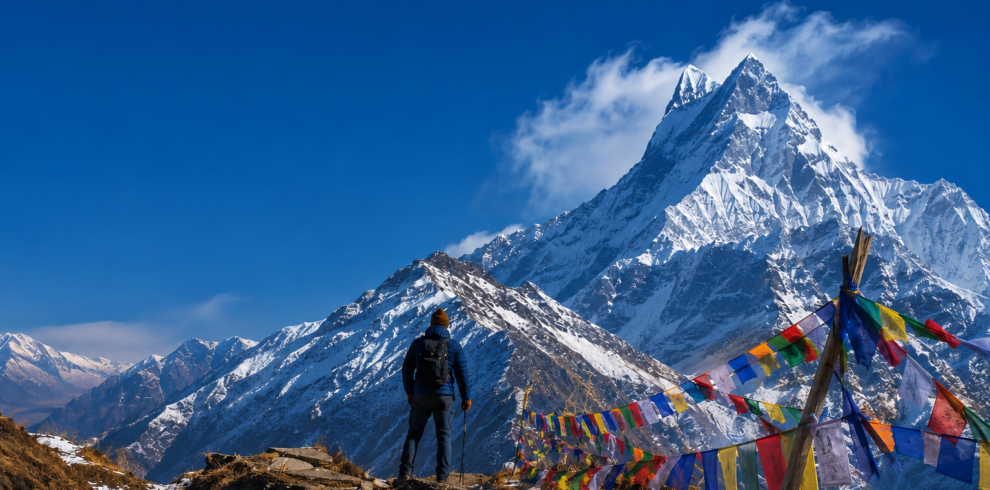
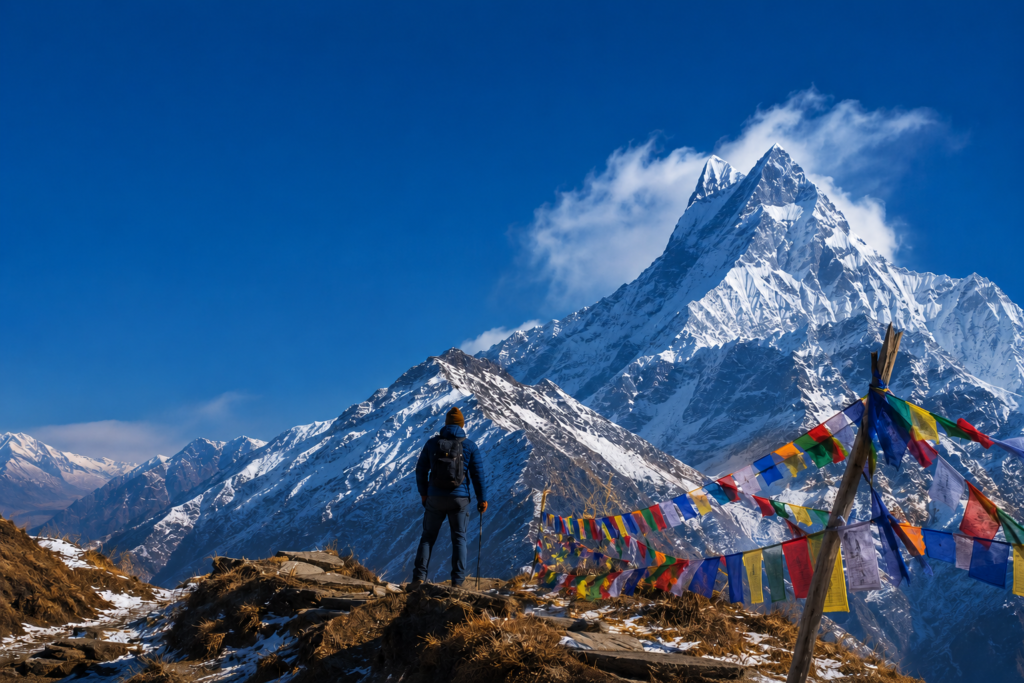
The Mardi Himal Trek is a spectacular 9-day short trek in Nepal, offering incredible close-up views of the Annapurna range. This beginner-friendly Himalayan adventure includes a detailed itinerary, clear cost breakdown, permits, and expert-guided trekking from Pokhara—perfect for nature lovers seeking a peaceful and unforgettable trek
Mardi Himal Trek Overview
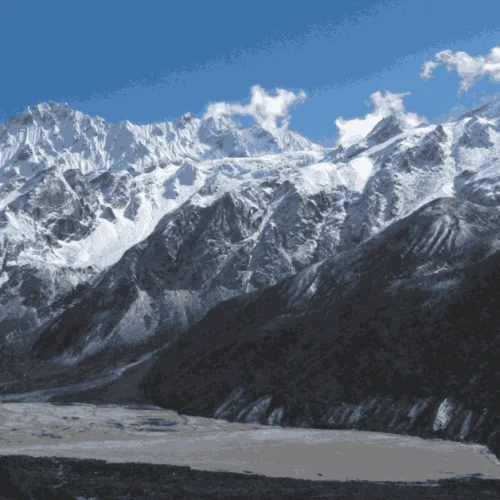
The Mardi Himal Trek is a short yet highly rewarding Himalayan journey in the Annapurna region of Nepal. The trek covers approximately 40–45 kilometers (25–28 miles) round trip and offers spectacular close-up views of Mardi Himal (5,587m), Machhapuchhre – Fishtail (6,993m), Annapurna South (7,219m), and Hiunchuli (6,441m).
The highest point of the trek is Mardi Himal Base Camp at 4,500 meters (14,763 ft), where trekkers are rewarded with a dramatic, uncrowded, and intimate Himalayan panorama. Compared to popular routes like the Annapurna Base Camp Trek and Ghorepani Poon Hill Trek, this route offers a quieter and more peaceful trekking experience.
Unlike busier trails such as the Annapurna Circuit Trek and Everest Base Camp Trek, the Mardi Himal route remains relatively less commercialized. The trail passes through dense forests, ridgelines, and traditional villages, offering a genuine connection with nature and local culture.
Mardi Himal Trek 9 Days Itinerary Overview:
Your adventure begins with arrival in Kathmandu, followed by a scenic drive to Pokhara, the beautiful gateway to the Annapurna region. From Pokhara, the journey continues by road to Kande, from where the trekking trail in the Mardi Himal region begins.
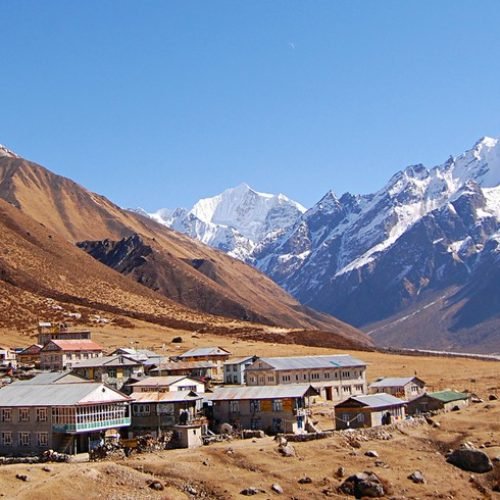
The trek gradually ascends through peaceful rhododendron and oak forests, passing traditional villages and reaching Forest Camp. As you move higher, the trail leads through Low Camp and Middle Camp, where the landscape opens and Himalayan peaks and valleys start to appear.
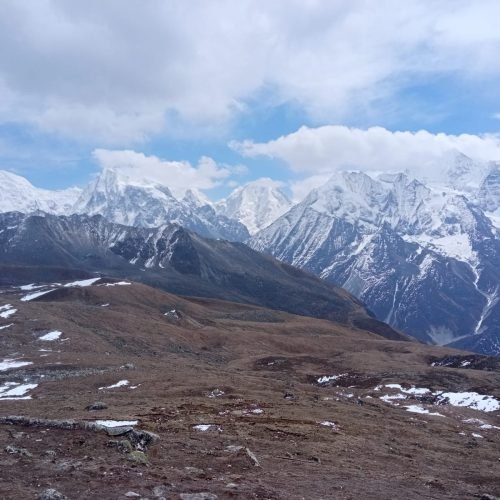
At High Camp, trekkers enjoy breathtaking close-up views of Machhapuchhre (Fishtail) and the Annapurna range. The highlight of the trek is an early morning hike to Mardi Himal Base Camp (approx. 4,500m), offering one of the most panoramic viewpoints in the Himalayas.
After enjoying the summit views, the trail descends through a different scenic route via Siding village, giving a unique cultural experience of local life. The journey concludes with a return to Pokhara and then back to Kathmandu, completing this unforgettable 9-day Himalayan trekking experience.
What to Expect on the Mardi Himal Trek
The Mardi Himal Trek offers a perfect blend of natural beauty, peaceful trails, and authentic mountain experiences.
Trekkers can expect:
During spring (March to May), the trail becomes vibrant with blooming rhododendrons, while autumn (September to November) offers crystal-clear skies and the best mountain visibility. In winter, light snow transforms the region into a peaceful alpine landscape.
The Mardi Himal Trek is suitable for a wide range of trekkers, making it one of the best short Himalayan adventures in Nepal.
It is ideal for:
Prior trekking experience is helpful but not required, making it a great option for those new to trekking in Nepal.
Useful Info
The Mardi Himal Trek to Base Camp is a moderate Himalayan trek in Nepal that requires basic physical preparation and mental readiness. While no advanced trekking experience is necessary, good fitness and preparation will greatly improve your overall experience.
This trek is suitable for most beginners, but trekkers should be able to walk 5–7 hours per day on uphill and downhill trails in varied terrain.
Physical Fitness Preparation
To prepare for the trek, it is recommended to build stamina and endurance before arriving in Nepal. Helpful activities include:
These activities help your body adapt to long walking hours and altitude changes during the trek.
Strength & Breathing Preparation
In addition to cardio fitness, flexibility and breathing control are important for high-altitude trekking. You can prepare by:
Health & Hydration Tips
Good hydration and body care are essential before and during the trek:
Final Advice
With proper preparation, the Mardi Himal Trek becomes a safe, enjoyable, and highly rewarding Himalayan adventure suitable for beginners and nature lovers.
Autumn, spring, summer, and winter are the four seasons that the Mardi Himal Trek experiences. Autumn and spring are the ideal times of year for the Mardi Himal Base Camp Trek out of 4.
For the Mardi Himal Trek, autumn is the ideal season. September, October, and November are the months that comprise autumn. One of the busiest times of year for trekking in Nepal. The Annapurna region's surroundings grow clearer in the post-monsoon season of autumn because of the summer's rainy weather. The region's picturesque splendor and visibility of the mountain ranges appear to be superb.
The second-best season of the year for Mardi Himal Trekking is spring. March, April, and May are the months in which it occurs. Various plants sprout and bloom in the spring, including rhododendrons. It's that time of year when everything outside turns green and rejuvenated. During this month, you may experience the aroma of many flowers as you hike to the Mardi Himal. This time of year is when the splendor of the natural flora and animals is at its height. Because it is the pre-monsoon season, the sky is often clear, giving you a clearer perspective of the mountains.
Breakfast is the first meal you eat after the long fast from the previous night. To build up a lot of endurance for walking for a long time on the route, the first meal must be nutritious and pleasant. You will be given a variety of meals for breakfast, including bread and chapati, eggs, porridge, soup, pancakes, and more.
In Nepal, the lunchtime meal is regarded as the main course. Therefore, Dal-Bhat is prepared in all teahouses as the main dish along with many other kinds. In recent years, a significant portion of foreign trekkers has also started to favor Dal-Bhat as their lunch option. Rice, noodles, pasta, pizza, hamburgers, dumplings, desserts, and a variety of other foods are typically available at teahouses for lunch.
Dinner is a tasty meal after a strenuous day of walking. Similar types of lunch and evening meals are available at the teahouses along the trail. The majority of Nepalese enjoy eating dal baht for lunch and supper, although foreign visitors prefer to select different dishes. The teahouses make a variety of hot and cold refreshments available in addition to serving breakfast, lunch, and supper.
The Mardi Himal Base Camp Trip is a teahouse trek that passes via guesthouses. The Mardi Himal Trek Route travels through a sparsely populated, extremely isolated area of the Annapurna range. As a result, the lodging options are also modest and provide few services. The bathrooms might be communal or private, and the rooms are typically tiny. The majority of the rooms are twin sharing, however, if you prefer a single room, please let us know in advance so that we may try to get one for you. But we can't guarantee it. The alternatives will decrease as the height rises, especially during the busiest hiking season, when hotels are fully occupied.
One of the most underappreciated hikes in Nepal is the Mardi Himal Trek. A lot of hikers are unaware of this lovely trail. This journey has a moderate difficulty rating from novice hikers, however, it is easy in comparison to other hikes like the Everest and Manaslu Trek. The lengthy hikes uphill are sometimes a little challenging for beginners. But rest stops along the route make the trip enjoyable. High-end hiking equipment, like ropes and ice picks, is not necessary. Reaching Base Camp from High Camp is the most difficult portion. This section of the trek is difficult because of the steep, rocky slopes. The routes along this trek's itinerary are rugged and unpaved. When it rains, it might be a little more challenging since the track becomes slippery. Forests also get slick in the rain. However, getting enough rest and drinking enough water will ensure a successful and enjoyable walk.
The danger of altitude sickness is quite minimal on the Mardi Trek, which is rated as mild. However, the trip may encounter unanticipated or unplanned occurrences, including accidents, illnesses, floods, landslides, or abrupt climatic changes. Therefore, Mardi Base Camp Trek requires travel insurance. Insurance coverage must cover medical and emergency extradition, as well as high-altitude helicopter rescue and evacuation costs. Based on our clients' experiences, we can suggest insurance providers, but we don't actually offer insurance. After making your trek reservation, we kindly ask that you provide us with comprehensive insurance paperwork. In an emergency, we will quickly rescue you by using your insurance.
In Nepal, altitude illness is sometimes referred to as acute mountain sickness (AMS) or altitude sickness. Altitude sickness symptoms often appear in Nepal at altitudes more than 3,000 meters. Due to the elevation of Mardi Base Camp (4500 meters), Acute Mountain Sickness might be a risk. Altitude sickness symptoms include headaches, exhaustion and laziness, a dislike of food, nausea, and vomiting, body tingling, dizziness, shortness of breath, and nasal bleeding.
Stop ascending to higher elevations as soon as you begin to experience AMS symptoms and take some time to relax. Trek to a lower elevation if your condition does not improve. To keep your body hydrated, remember to consume lots of water and other drinks. Acetaminophen, like Tylenol, or another pain reliever, like Ibuprofen 500 mg should be taken if you are experiencing extreme pain. Two times daily, take 250 mg of acetazolamide for altitude sickness.
Your hiking clothing and equipment are one of the most crucial and significant things during Mardi Himal Trekking. The right tools include a sleeping bag, a set of High Mountain walking boots, poles, a duffel bag, necessary warm and comfortable hiking clothing, warm socks, gloves, sunglasses, sunscreen, and so on. Another important consideration is that the finest gear for hiking in the high mountains should be light, breathable, and comfortable. Ensure that you have all the required paperwork, records, and concepts for restricted and non-restricted items.
Mardi Trek Guide and Safety:
Our client's safety and security are guaranteed, and we are ready for everything. The following safety precautions are taken by Trekhimal Expedition Pvt Ltd, a reliable company:
Our airport representative will meet you at Tribhuwan International Airport. He will drive you to the hotel in a private car and assist you to check in. You can take a rest after a long travel or go out of your hotel and explore some of the lovely places of Kathmandu city. You will meet your guide during the Mardi Himal Trek briefing that will take place in the evening. The hike's information and any missing equipment will be provided by the guide.
After breakfast in the hotel, you will take a tourist bus to start your Mardi Himal Trek, which might take 8 to 9 hours to reach Pokhara. On the way, you can see the picturesque Trishuli and Marsyangdi rivers along the green Rocky Mountains, rivers connecting each other, and small springs. Pokhara is a beautiful valley known for several lakes such as Begnas, Fewa, Rupa, Dipang, Maidi, Khaste, Gunde, and Nyureni. We can also get a glimpse of Annapurna, Machapuchare, Dhaulagiri, Manaslu, and Lamjung Himal from Pokhara Valley.
After Breakfast in the hotel, you arrange private vehicle oo reach Kande, the beginning site of the Mardi Base Camp Trekking, you will depart from Pokhara with our guide. You will climb up from Kande to Australian Camp, then Pothana through a rhododendron forest, and finally Pitam Deurali. You are welcomed by magnificent vistas of the Annapurna peaks as you pass via ethnic Brahmin, Magar, and Gurung communities. For viewing the Pokhara valley and the Annapurna range, Pitam Deurali is the ideal vantage point. Once you've checked in, spend the night at a hotel to relax and acclimatize before the next day's hike.
You must go cautiously and slowly forward since your Mardi Himal Trek Route from Pitam Deurali will gradually climb in elevation. You will encounter more gorgeous greenery as you go to higher elevations. You will go along a trail that passes through rhododendron, birch, oak, maple, and hemlock forest. Wildlife such as leopards, deer, monkeys, and several bird species may be seen throughout your route. A steep crossing towards Annapurna South and views of Hiuchuli may be seen as you travel along the path and through the dense wood. After passing through Forest Camp (Kokar) and Rest Camp you will arrive at Low Camp, where you will be treated to a spectacular panorama of Fishtail Mountain.
Your Mardi Himal Trek journey will begin from Low Camp and travel via Badal Danda to High Camp. You must ascend through a rhododendron forest for one hour to reach Badal Danda. Although the routes are challenging, you will be rewarded with stunning views of the Mardi Himal, Annapurna Range, and Machhapuchhre (fishtail mountain). The ridge gets thinner as you go up, and you can see the huge valleys on each side. You will be facing the Modi Khola river valley to your left, which is bordered by communities that rise up to the Annapurna Sanctuary. You can see the Mardi Khola and Seti river valleys to your right. You can even see the Pokhara Valley on clear days. To get to High Camp, you must keep trudging along the ridgeline. On your trip to the high camp, if you're lucky, you could get the chance to witness Daphne, the national bird of Nepal.
In order to witness the sunrise over the mountains today, you will get up early. It will be the most memorable and challenging journey of your whole Mardi Himal Trek Itinerary today. Mardi Trek Route is more difficult than you may imagine because of a series of rapid ascents that you must accomplish on uneven and steep steps. To go to Mardi Himal Base Camp, will take you around 5 hours. At the elevation of 4500m/ 14,763ft, reaching the base camp while traversing a lush, green, High Mountain will make you feel extremely accomplished. You will also be captivated by the expansive panorama of the snow-capped mountain ranges of Mt. Machhapuchhre, Mardi Himal, Annapurna I (8,091m/ 26,545ft), Annapurna III (7,555m/ 24,786ft), and Gangapurna (7,455m/ 24,458ft). You will travel down to Badal Danda to enjoy the floating cloud that goes through you after capturing those amazing and delightful views in your heart.
It's time to descend to Siding after spending some wonderful time at Badal Danda capturing lovely memories, taking in the stunning Himalayan scenery, and discovering the natural environment with rare flora and wildlife. Instead of returning to Forest Camp, this Mardi Himal Trek alternate path descends to the remarkable settlement of Siding. You will eat lunch at Siding, and then you will take a shared jeep to Pokhara. You will have evening free time in Pokhara to go boating or explore the lovely lakeside surroundings.
You will wake up early today and travel to Sarangkot to take in the splendor of the sunrise. Dhaulagiri, Annapurna, and Manaslu may all be seen from Sarangkot. It also offers a wide-ranging vista of the Pokhara Valley, including the Phewa Lake. When returning to your hotel from Sarangkot, you may also tour Bindabasini, the city's oldest temple. You will take a deluxe tourist bus through the Prithvi Highway from Pokhara to Kathmandu after breakfast. Depending on traffic, it takes 7 to 8 hours to go around 205 kilometers/ 127 miles. Along the way, you will pass through various landscapes and see the vibrant and busy bazaars of Damauli, Dumre, Mugling, etc. The Mardi Himal Base Camp Trek will be successfully concluded with a celebration that you will attend in the evening. Live ethnic music is available as you eat a typical Nepalese supper. You can purchase mementos to take home or take some photographs to remember your trip.
Depending on your departure schedule, we will often set up an airport transfer service three hours before departure. If you have additional time, we can set up some side trips for you, or you may go exploring on your own.
Yes, the Mardi Himal Trek is suitable for beginners with a basic level of fitness. The trail is relatively short and less crowded compared to other treks in Nepal, but it still includes some steep sections and altitude gain
The climb from High Camp to Mardi Himal Base Camp is the most demanding due to steep ascent and altitude. However, it is short and manageable with proper pacing.
Starting early (around 6:30–7:30 AM) is ideal for clear mountain views and avoiding afternoon clouds. Our guides usually adjust the timing based on weather and group pace.
Unlike Everest region treks, Mardi Himal does not require flights. The journey starts by road from Kathmandu to Pokhara, making it more reliable and less prone to delays.
Yes, the trek can be shortened to 4–5 days or extended with side trips depending on your schedule. We can adjust the itinerary based on your time and fitness.
Safety always comes first. If reaching base camp is not possible, High Camp still offers spectacular views of Machhapuchhre and the Annapurna range, making the trek worthwhile.
Yes, most tea houses offer charging facilities for a small fee. It’s recommended to carry a power bank as backup, especially at higher altitudes
Yes, but with conditions:
Spring and autumn remain the best seasons.
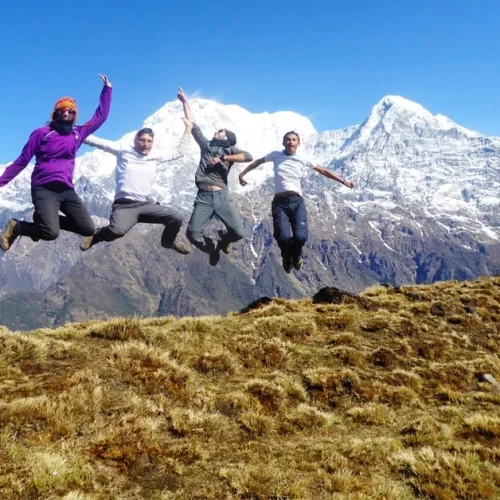
This trek is popular among:
Bottled water is available but not environmentally friendly. We recommend using water purification tablets or filtered water provided at tea houses.
The lodging is modest when compared to a city's finest hotel or resort. The room has basic furnishings including single, double, triple, twin, etc. beds. There will be beds with mattresses, covers, and other items. Shared bathrooms and toilets are available. You must have toilet paper, shampoo, soap, and a towel on hand. There is an additional fee for WI-FI.
There are showers at Deurali and Siding. Both the High Camp and the Rest Camp lack showers. You may use a bucket to take a shower if you want to.
In Mardi Himal, clean drinking water is provided by almost all teahouses. As a result, you don't need to worry about the water's purity when hiking. Simply bring a water bottle, and fill it up at the teahouse each morning before you go out on your hike. We do suggest that you bring water purifiers or pills, nevertheless, in order to cleanse the water before consuming. The shops and teahouses along the route also sell bottled water. However, because buying bottled water just increases the amount of plastic trash on the trekking path, we do not advise doing so. Never consume water from the tap, a nearby river, or any other natural source, either.
Only the urban regions of Nepal, including Kathmandu and Pokhara, accept credit cards. Credit cards are not accepted when you enter the hiking area. You must thus have adequate cash on hand.
In most cases, the trip leader will assist and support you to descend to a lower altitude if you fall ill. We will set up an emergency helicopter evacuation service if you are critically ill or hurt. Depending on the scenario in the mountains, our guide will respond right away. Ensure that you have travel insurance that includes coverage for both high-altitude trekking and emergency evacuation services
While seeing Mardi Base Camp with us, you will feel 100 percent protected. We promise that your vacation will remain in your memory for the rest of your life.
We will provide one porter for every two trekkers, depending on the size of the group. Throughout the walk, the porter will carry 12 to 15 kg of baggage per person. You must carry your daypack to store your personal items, such as your wallet, camera, water bottle, dry food, headlamp, and other electronics. Please only carry items that are absolutely necessary.
Yes, there are many tea houses along the walk path, however during the busy season, they could fill up. When choosing the best time to embark on the Mardi Himal trip, you must be extremely vigilant about the accommodations.
The Mardi Himal Trek's highest point is 4500 meters above sea level. Similar to that, the Mardi Himal Trek from Pokhara covers a total of roughly 68 kilometers
The journey can definitely be extended by a few extra days. We may add days to your journey at your request, but there will be an extra charge to cover guides, porters, lodging, and food.
Only works on Trip page.