Contact Us
-
Bhagwan Bahal Marga,
Thamel, Kathmandu - +977-9701525176
- trekhimaltour@gmail.com
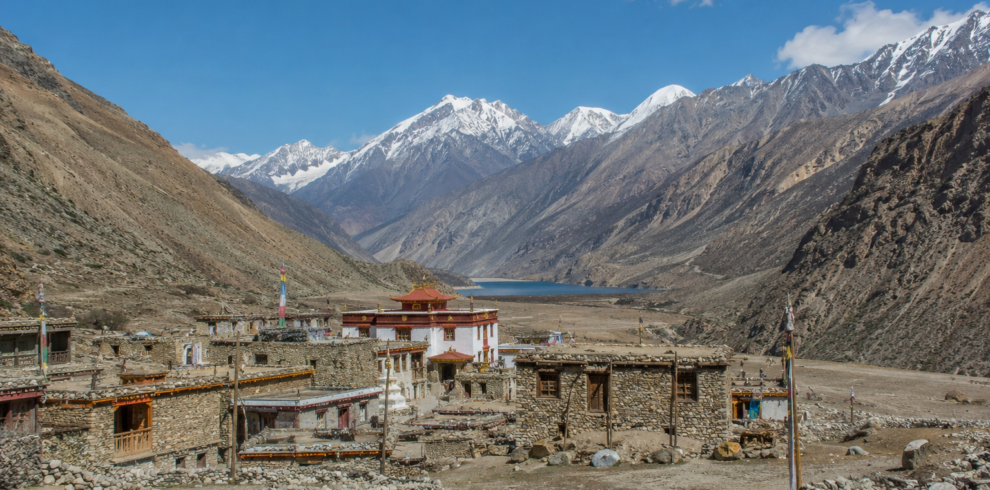
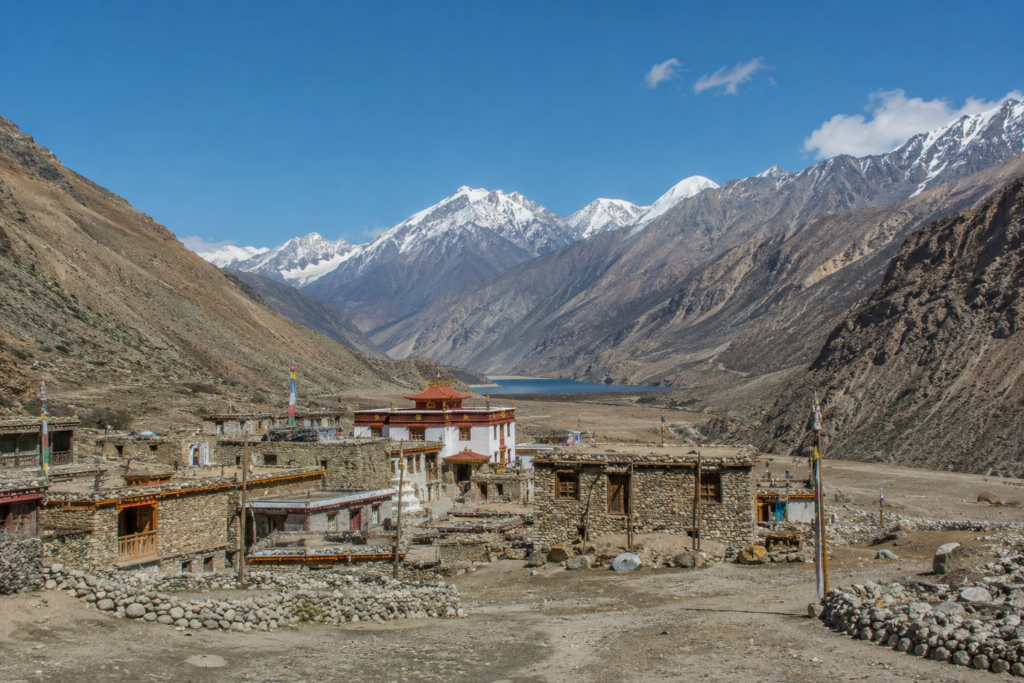
On the western slopes of Nepal, the Lower Dolpo Trek offers a fantastic trekking experience. Lower Dolpo Region, which lies beyond the bustle of towns, is regarded as one of Nepal's hidden jewels. The Lower Dolpo Trek will provide you with an off-the-beaten-path trekking adventure and lead you to the serene Shey Phoksundo Lake at a height of 3611 meters above sea level. One of Nepal's most stunning lakes is the blue Shey Phoksundo. This lake is situated on the border of Shey-Phoksundo National Park, which is the biggest national park in Nepal. This park is encircled by tall hills, with Mt. Kanjiroba in the distance.
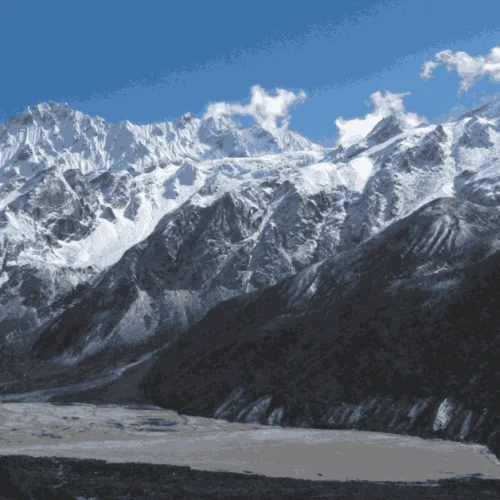
The traditions and culture of Tibet have a significant impact on the entire Lower Dolpo Region. You will encounter pre-Buddhist Bon Po and Chaiba civilizations on the Lower Dolpo Trek. Every year, hundreds of pilgrims travel from all over the world to attend several festivals and festivities held near the lake. You will get to encounter a highly varied culture, set of values, and worldview. The Annapurna range (8,091 m), Mt. Dhaulagiri (8,167 m), Mt. Api (7,132 m), Mt. Nilgiri, Kagmara Ri (5,115 m), and other neighboring snow-capped summits may all be seen during the Lower Dolpo Trek. Lower Dolpo Trekking will provide you with breathtaking views of a snow-capped peak in addition to mind-blowing arid alpine scenery.
Lower Dolpo Trek has been accessible to hikers since 1991 and is one of the most challenging treks in Nepal. On the north side of the Himalayas, behind the Dhaulagiri peak, is where you will find the Lower Dolpo. The finest months to embark on a Lower Dolpo Trek are from the start of August to the end of October and from early March to early May. Views of the countryside will be very clear. The entire area also had a wildflower bloom, and the Himalayan Mountains' fresh, chilly air can be felt in the air. You can trek in Lower Dolpo during the monsoon because it is a region of Nepal that experiences less rain.
A challenging trek in Nepal's western area is the Lower Dolpo Trek. You will experience traveling off the beaten path on the trail. A typical day would involve six to seven hours of walking and two pass crossings. Strong physical stamina and overall health are necessary for all of these. To embark on the Lower Dolpo Trekking, you don't necessarily need to have any prior trekking experience unless you are very committed to finishing the adventure. Today, the Lower Dolpo Trekking Itinerary is quite famous due to its natural manifestation of high passes, unusual flora and fauna, stunning landscape, a lake, remote Buddhist monasteries, and traditional Tibetan culture. From 1650 meters to 5136 meters above sea level, the Lower Dolpa Trekking Route runs.
Beginning with a picturesque flight from Kathmandu to Nepalgunj and then to Juphal, the 18-day Lower Dolpo Trek Itinerary begins. You will start your walk from Juphal and go towards Dunai via terraced farms and small gorges while taking in breathtaking views of Mt. Dhaulagiri (8167m) and Mt. Annapurna (8091m). Your Lower Dolpo Trek will rise into Dho Tarap village through Tarakot, Laini, Nawarpani, and several other picturesque villages after leaving Juphal behind. You will take a day off to acclimatize in Dho Tarap and wander about the community. In addition, the Lower Dolpo Trekking Trail will traverse the difficult Numa La Pass (5,190 m) and Baga La Pass (5,070 m) before arriving at the lovely Ringmo settlement. The next day, you will climb Phoksundo Lake, the most appealing destination along the Lower Dolpo Trek. You will travel down to Shyanta village after spending a day here. Your Lower Dolpo Trek Itinerary comes to an end when the trek returns you to Juphal, where you may board a flight to Nepalgunj and then another to Kathmandu.
The Lower Dolpo trek offers a unique and remote experience through the remote and less visited areas of the Dolpo region in Nepal. You can expect to see:
Overall, the Lower Dolpo trek is an adventure for those seeking a remote, challenging, and culturally rich experience in the mountains of Nepal.
The Lower Dolpo Trek is challenging and suitable for people with a good level of fitness and a love for adventure. To determine if the trek is suitable for you, consider the following factors:
If you are confident in your physical fitness and are prepared for the challenges of the trek, the Lower Dolpo Trek can be an incredibly rewarding experience. However, if you have any medical conditions or concerns, it's best to consult a doctor before embarking on the trek.
Preparation is an essential part of making the Lower Dolpo Trek a successful and enjoyable experience. Here are some steps you can take to prepare:
When you land at Tribhuvan International Airport, a member of Trekhimal Expedition Pvt Ltd will greet you. He will then drive you to your hotel and assist you with checking in. You can meet us at our office to collect information on the Lower Dolop Trek Itinerary after taking some time to recuperate. The firm will provide a welcome supper for you as a way of expressing our thanks and welcoming you to Nepal.
You will be taking a tour of Kathmandu today with a guide. You will start your tour after breakfast by going to the first site, Pashupatinath Temple. You will move toward Boudhnath Stupa from here. The next destinations on the trip are Swayambhunath and Kathmandu Durbar Square. These sites will display Nepal's rich cultural legacy because they are all UNESCO World Heritage Sites. Your Lower Dolpo Trek guide will meet with you in the late afternoon.
With your guide and other crew members, you will board a domestic aircraft from Kathmandu to Nepalgunj following breakfast to begin your 18-day Lower Dolpo Trekking Journey. You will arrive at Nepalgunj, Simikot's entrance, after an hour-long picturesque flight. You will explore the lively market, miniature zoo, and adjacent towns later in the day.
You will start your main Lower Dolpo Trekking adventure today. You will fly from Nepalgunj to Juphal after a delicious breakfast in Nepalgunj. The flight will be scenic and brief. You will start your walk towards Dunai after you get to Juphal. You will enjoy stunning views of Mt. Dhaulagiri (8,167 m/ 26,794ft) and Mt. Annapurna (8,091 m/ 26,545ft) throughout the route. You can reach the Bheri River by hiking via terraced farms. The route continues in a small canyon from here and brings you to Dunai, the Dolpo region's administrative center.
You will start your hike along the Bheri River's southern bank before climbing upstream on a simple route. You will travel by a number of steep gorges, exciting hanging bridges, and lovely remote villages along the way. You will travel via the Lower Dolpo Trekking Trail to Tarakot, a tiny community located on a hill to the south of the Bheri River, and spend the night there in a tea house.
Today, the Lower Dolpo Trek Route will follow the Tarap Chu River. Reaching Sandul Gompa, which is situated between the Barbung Khola and Tarap Chu Rivers, requires twice crossing this river. You will keep strolling through communities and farms with terraces after this. To get to Laini, you will need to climb and descend several times.
You will start your Lower Dolpo Trekking after breakfast and hike a hard trek over the Tarap River. The valley narrows into a canyon as you go on, making it possible to jump from one side to the other with ease. You will eventually arrive at Chyugur Khola after completing difficult ascents and descents. From here, it will only take you a short stroll to reach Nawarpani, where you will spend the night in a tea house.
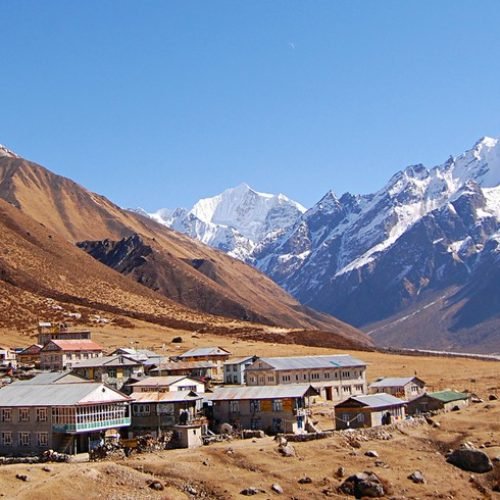
You will gradually climb up to Kamattarka, which is at the meeting point of the Tarap Chu River and the Lang Khola, after leaving Nawarpani. You will leave the tree line behind as you cross a small canyon and enter the dry inner Himalayan valley, which will greet you with magnificent juniper and wild rose shrubs. From here, you will continue the Lower Dolpo Terkking Trail to the settlement of Dho Tarap, which is encircled by crooked stone walls. You may practice the distinctive Bon Po and Chaiba religions here.
According to the Lower Dolpo Trek Itinerary, this is a day for acclimatization and recuperation at Dho Tarap village. This rest day will aid in your acclimatization and give you the chance to explore the community and its surroundings. You will get the chance to speak with residents and see their way of life, culture, and traditions. Religions practiced here are Chaiba and Bon Po. You may sample their offerings and admire their lovely attire.
Today's Lower Dolpo Trekking Trail will lead you to the upper Tarap valley, where you can see green grassland lining both sides of a beautiful river. You may get to Tokyo by hiking along the Tarap Chu River. You may explore the Chiba sect's monastery here. Later, you will hike a difficult terrain to reach Numa La Base Camp, where you will spend the night
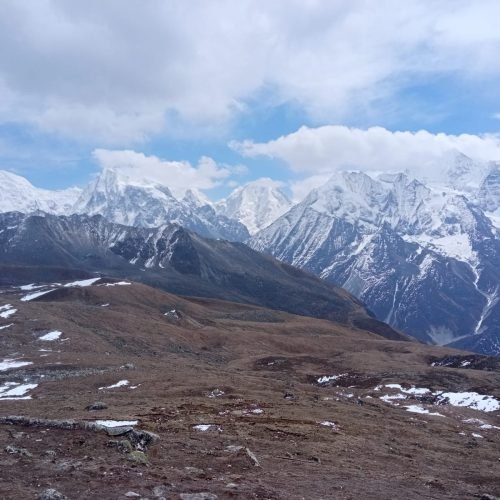
It will be the longest and most difficult day of the Lower Dolpo Trek Itinerary. After a delectable breakfast, you will head uphill toward Numa La Pass. You will get breathtaking views of the parched Dolpo Mountains rising to Mount Dhaulagiri from the pass's summit (8,167m/ 26,794ft). Spend some time here before making your way down to Pelung Tang, where you will spend the night in a tent camp.
You will pass another pass today. To get to Baga La Pass, you must hike a difficult path. Once more, the view of the desert terrain, Mt. Kanjirowa in the distance, and snow-capped mountains is breathtaking from the pass's peak. Your Lower Dolpo Trek Route will descend to Dajok Tang for the night after some time has passed. In a tea house, you will spend the night.
The Lower Dolpo Trekking Trail is mostly through alpine greenery and luxuriant pine trees. You will reach Ringmo village, a Tibetan settlement in the Dolpo area, on a slightly easier trek than on past days. You will spend the night in a tea house in the village of Ringmo.
You will get up early and eat a great breakfast. The Lower Dolpo Trekking Tril will next go to Phoksundo Lake, which is situated 3,611 meters above sea level. The most enticing site in Dolpo is this lake. Yak caravans and local monasteries can be visited as you travel. You will be greeted by breathtaking surroundings when you arrive to Phoksundo Lake. You will spend the night close to the lake today. You will spend the night in a tea house.
You will start descending into Shyanta village after breakfast in Phoksundo Lake. You will get to Chepka. The Lower Dolpo Trekking Trail will continue on from here and will pass through various settlements as it follows a huge overhanging cliff. You will pass through therapeutic minerals along the journey that are thought to treat practically everything in this region. You will continue to climb until you arrive at Shyanta village, where you will spend the night in a tea house.
You will make the trip back to Juphal today through Sulighat. You will pass a lot of birch trees and enjoy stunning mountain vistas along the route. When you get to Juphal, you will rest up and spend the evening exploring its market. You will spend the night at a Juphal tea house.
You will be traveling back-to-back today, first to Nepalgunj and then to Kathmandu. Your Lower Dolpo Trek Itinerary will come to a conclusion once you arrive in Kathmandu, where you will check into your hotel and spend the day unwinding. You will attend the company-organized farewell dinner that evening. Additionally, you will get ready to travel to your hometown tomorrow. You will spend the night at a Thamel hotel with three stars.
You will check out of the hotel after breakfast.
The length of the Lower Dolpo Trek varies depending on the route, but the standard trek takes around 18 days to complete.
The highest point on the Lower Dolpo Trek is the Numa La Pass, which stands at 5,190 meters (17,000 ft) above sea level
The best time to do the Lower Dolpo Trek is from May to September, when the weather is clear and stable, and the views are at their best.
Yes, a special permit is required to do the Lower Dolpo Trek. The Lower Dolpo Trek falls within the Shey Phoksundo National Park, and a permit is required to enter the park.
The accommodation during the Lower Dolpo Trek varies depending on the route and the type of trek you choose. Tea houses, camping, homestays, and lodges are all options, but the standard of accommodation can be basic and electricity and hot showers may not be available in some places.
The Lower Dolpo Trek is considered a challenging trek, and it is not suitable for beginners. The trek involves long days of walking, high altitude, and rugged terrain. Some prior trekking experience and good physical fitness is recommended.
Yes, the Lower Dolpo Trek is considered safe, as long as you are properly prepared and equipped. It is important to be aware of the risks associated with high-altitude trekking and to take appropriate precautions, such as getting travel insurance, staying hydrated, and avoiding altitude sickness.
Essential items for the Lower Dolpo Trek include good quality trekking gear, warm clothing, a sleeping bag, a waterproof jacket, a hat, gloves, and sunscreen. A comprehensive packing list can be found online or through your trekking agency.
Food options on the Lower Dolpo Trek are limited and can be basic. The staple foods are rice, noodles, and potatoes, and the variety is limited by what is available in the local villages. Trekkers should be prepared to eat simple and repetitive meals, but there are occasional opportunities to try local specialties, such as momos and Tibetan bread.
it is possible to charge electronic devices on the Lower Dolpo Trek, but it is best to bring a power bank, as the availability of electricity can be limited. Many lodges and tea houses have generators that can be used to charge devices, but they may not be available 24 hours a day.
Medical facilities on the Lower Dolpo Trek are limited, and it is important to be prepared for emergencies. Your trekking agency should provide a first-aid kit, and it is advisable to bring a personal medical kit with you, including essentials like pain relief, blister treatments, and a course of antibiotics. If you have any pre-existing medical conditions, it is essential to consult a doctor before the trek.
Only works on Trip page.