Contact Us
-
Bhagwan Bahal Marga,
Thamel, Kathmandu - +977-9701525176
- trekhimaltour@gmail.com
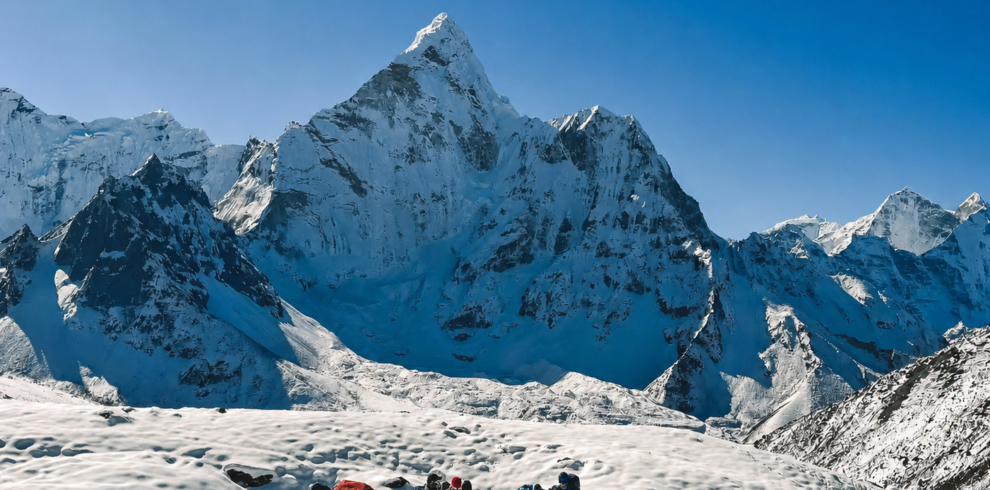
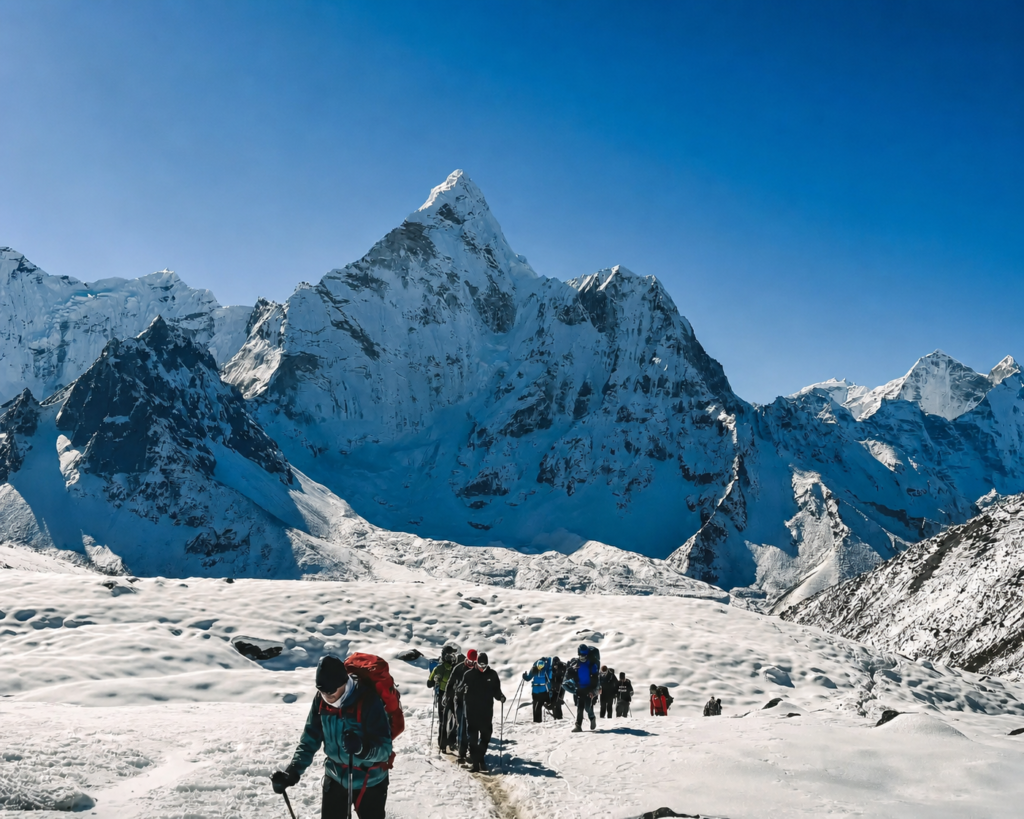
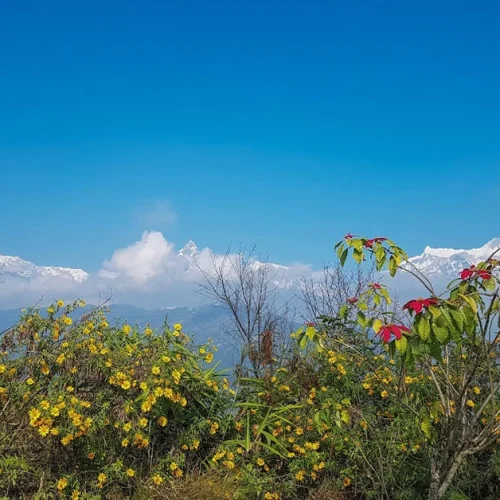
Ama Dablam is characterized by its sharp, exposed ridges and steep faces. This mountain's iconic southwest ridge rises like a shark fin, making it a visually striking feature against the Himalayan skyline.The mountain is part of the Mahalangur range and lies south of Everest and Lhotse, providing climbers with breathtaking panoramic views of these giants.
During the trekking seasons (March, April, May, September, October, and November), due to congestion at Tribhuvan International Airport (TIA) in Kathmandu, flights to Lukla may be redirected from Manthali. To catch the early morning Lukla flight from Manthali, we'll pick you up from your hotel around 12:30 am for a 5-hour drive to Manthali Airport. The subsequent 20-minute flight from Manthali will take you to Lukla.
You can hire a helicopter from Kathmandu to Lukla to avoid the Kathmandu-Manthali-Lukla route. It comes at an approximate cost of 550 USD per person when shared among five individuals.
In December, January, February, June, July, or August, your flight from Kathmandu to Lukla will be direct. After breakfast, we'll take you to Tribhuvan International Airport (TIA) for a picturesque 40-minute flight to Tenzing Hillary Airport in Lukla. From Lukla, you will hike for approximately 3 hours to reach Phakding, passing through smaller villages - including Chaurikharka.
Phakding is the starting point for all Everest region treks, and the Phakding market is full of shops selling gear and souvenirs, cafes, restaurants, and other facilities. After reaching Phakding, you are free to explore this town. Do not skip visiting Rimishung Monastery.
After a warm cup of tea on a chilled morning, we begin our actual hike today. We continue along the northern bank of the Dudh Koshi River crossing several suspension bridges embellished with prayer flags. The lively and vibrant color of the prayer flags all along the trail will make it remarkably exciting. After a few hours of walking, we reach Monjo Village, from where the Sagarmatha National Park starts.
We register our permit at Sagarmatha National Park and follow the trail through a dense jungle. From this jungle, we get the first views of Mount Everest. We will continue hiking until we reach Namche Bazaar - the gateway to Everest.
We acclimatize at Namche Bazaar to cope with the thinning air. Namche Bazaar offers a wide range of facilities. From hotels and restaurants to souvenirs and gifts shops, Namche has almost everything available in the city areas.
Even though it is an acclimatizing day, you will not stay idle. You can have an optional yet suggested hike to the Khumjung and visit the Sagarmatha National Park Visitor Center. Similarly, you can also visit the Hillary school and old monasteries on your way to Khumjung.
As you hike up to Khumjung, you will pass by a famous monastery that people believe houses a Yeti-scalp. Furthermore, you will also visit one of the world's highest airports - Syangboche Airport. If you want to view mount Everest some more, you should trek to Everest View Hotel. To conclude the day on a fine note, you can enjoy the bakery products from famous bakeries in Namche.
Today, we trek to Deboche on a trail full of uphills and downhills. The splendid views of the Himalayas and the chances of spotting high-altitude animals mean you will complete the trek without even realizing it.
When you reach Phunki Tenga, you will find yourself surrounded by picturesque mountains like Everest (8,848 m), Ama Dablam (6,812 m), Lhotse (8,516 m), Nuptse (7,861 m), and Thamserku (6,623 m).
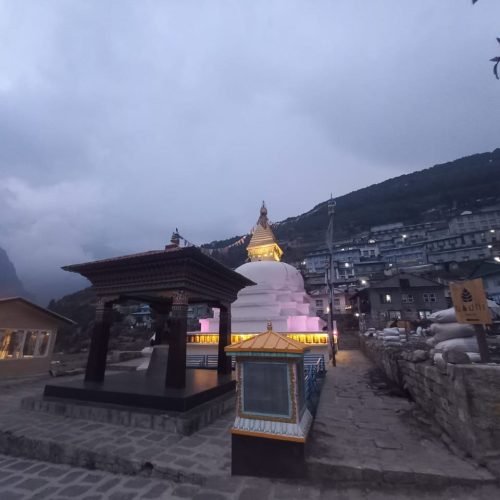
The trail passes through Tengboche Monastery, also called the "Monastery on the top of the hill." It is the largest Gompa in the Khumbu region. We will loosen up at the monastery for a while. Then we will continue until we reach Deboche.
We head to Dingboche through several villages - including the Pangboche (3,985m), past many stupas and mani walls while enjoying the magical views of the Himalayas. We will witness the up-close view of Ama Dablam (6,812m) from the path.
The trek becomes lighter as we enter the Imja Valley, following the Lobuche River. We descend to the river and then climb a steep uphill to Dingboche (4,360m). Dingboche, also known as the summer valley of Khumbu, comprises of fields enclosed by stone walls protecting crops like barley, buckwheat, and potatoes. The view from Dingboche is impressive, with the Himalayas surrounding the entire valley
We start this day early. As the sun rises slowly from behind the mountains, we witness an amplified beauty of the landscape. A few hundred meters up from Dingboche, we get a gorgeous view of the entire valley. The trail is a little difficult, but it should not be tough.
As you trek to Chhukung, you pass by several Buddhist stupas with prayer flags stretching across. If you manage to hike early, you can witness a remarkable view with the sun backlighting the stupa and flags, forming a warm, golden halo around them. With a comfortable walk, we reach Chhukung.
Chukkung village is a bucket of wonders, and it also serves as an alternative acclimatization point for Everest Base Camp trekkers. This village provides spectacular views of snow-capped mountains, rivers, and glaciers.
You also have the option to hike to Chukkung Ri, from where you can get
exceptional views of Mount Lhotse (8,516m), Island Peak (6,189m), Ama Dablam (6,812m), Makalu (8,463m), and others. We will also be following the principle of trekking hike high and sleep low. A blend of extraordinary landscape and people, Chukkung is a great place to adjust to the elevation while relaxing the body.
We start our trek early to traverse through one of the most famous passes of this trek - Kongma La Pass. Kongma La Pass (5,535m) can be challenging with heavy snow on the trail. Though the hike will be challenging, the views will be equally rewarding.
Situated right behind Chukkung, we pass through a small stream that leads us to a landslide trail. Moving ahead of this steep trail, we come across a hill from where the views of Dingboche and Tengboche look exceptional.
As we continue our hike, we face the hardest part of the trek- just before reaching Kongma La Pass. From the pass, on one side, you will see Kongma La Lake surrounded by several snow peaks, and on the other side, you see the Lobuche Village along with Khumbu Glacier.
We climb up the moraine and then walk past the Khumbu glacier for an hour to reach Lobuche. The view from Lobuche is especially alluring, with Kala Patthar and Mount Everest dazzling in the setting sun. The shimmering mountains will make you forget the hardships you faced during today's trek.
As you get closer to the destination, the excitement increases, and you will find yourself a little excited. From Lobuche, we start fresh and eager to step on the foothills of Mount Ama Dablam. On the adventurous trail, you will move further to Pangboche. The walk should be comfortable compared to the previous day. You might even see yaks bathing in the river or grazing in the meadows. We halt at Pangboche and prepare for our final ascent to the base of Ama Dablam.
The way from Pangboche to Ama Dablam Base Camp is divinely beautiful while offering a thrilling experience. As you get closer to Ama Dablam, you can observe the details of this mountain and understand the reason behind its name - 'Mother's Necklace".
For trekkers, Ama Dablam Base Camp trekking is one of the most sought-after and enjoyed alternatives to the Everest Base Camp trek. We cross Imja Khola before starting with the ascent to Ama Dablam from Pangboche. You will reach the base camp in no time and enjoy the views from the top.
The scenic beauty of Everest (8,848m), Amadablam (6,812m), Lhotse (8,516m), Kantega(6,782m), and other peaks will impress you beyond your imagination. After spending good quality time enjoying the beauty of the snow-capped mountains, we head back to Pangboche. We conclude our hike to Ama Dablam with a heart filled with fresh memories of the base camp. However, the trail back to our home awaits.
The trail from Pangboche to Namche Bazaar is mostly downhill. It will be no surprise that you might wonder how you climbed all those steps.
With the views of vibrant color of prayer flags and elegant Stupas, the tip of Mount Everest, and the back of Mount Lhotse, this hike will be as memorable. We halt at Namche Bazaar for this day and enjoy a variety of cuisines. After all, we deserve something delicacy for accomplishing this trek.
This day will be the last day on the trails. We trek through small villages and narrow forests, passing through the thrilling suspension bridges. As you continue your trek, you will reach Benkar, and little ahead lies Phakding.
However, we continue our trek past Phakding to Toktok. The views from Toktok are unique and enticing. While appreciating these views, we hike forward to reach Lukla. Lukla is the starting and ending point for the trails in the Everest region, and it is just the right town for this.
After returning to Lukla, you will fly to Manthali or Kathmandu, depending on the ongoing trekking season. If your trek is in March, April, May, September, October, or November, you'll board a plane to Manthali, followed by a five-hour drive to Kathmandu. For the remaining months (December, January, February, June, July, and August), you will fly from Lukla to Kathmandu directly.
Should you choose to bypass the Lukla-Manthali-Kathmandu route, you can team up with four other individuals to collectively book a helicopter, incurring an additional cost of around 550 USD per person.
With no more uphills or downhills to conquer, you can enjoy your journey back in complete peace. With a heart filled with pleasant memories, your trek will conclude in Kathmandu. You can wander in and around the alleys of Kathmandu on your own and end the day with good food and a little music.
There aren't strict age restrictions for the Ama Dablam Base Camp Trek, but we recommend this trek for 18 and above-aged children. The trek involves challenging terrain and high altitude, which might be tough for younger children
The Ama Dablam treks are captivating due to the stunning views of the iconic Ama Dablam peak, often called the "Matterhorn of the Himalayas." The trek also immerses you in Sherpa culture, with opportunities to explore remote villages, ancient monasteries, and the breathtaking landscapes of the Khumbu (Everest) region.
You’ll catch your first glimpse of Mt. Ama Dablam on the second day of the trek as you hike from Phakding to Namche Bazaar. The view of this majestic peak will become more prominent as you ascend towards Namche Bazaar, giving you a taste of the stunning scenery that awaits you further along the trek.
Yes, you can customize your Ama Dablam Trek itinerary to fit your preferences, including adjusting the duration, and route, and adding any additional activities you'd like to include.
Only works on Trip page.
Ut enim ad minim veniam, quis nostrud exercitation ullamco laboris nisi ut aliquip ex ea commodo consequat. Duis aute irure dolor in reprehenderit in