Contact Us
-
Bhagwan Bahal Marga,
Thamel, Kathmandu - +977-9701525176
- trekhimaltour@gmail.com
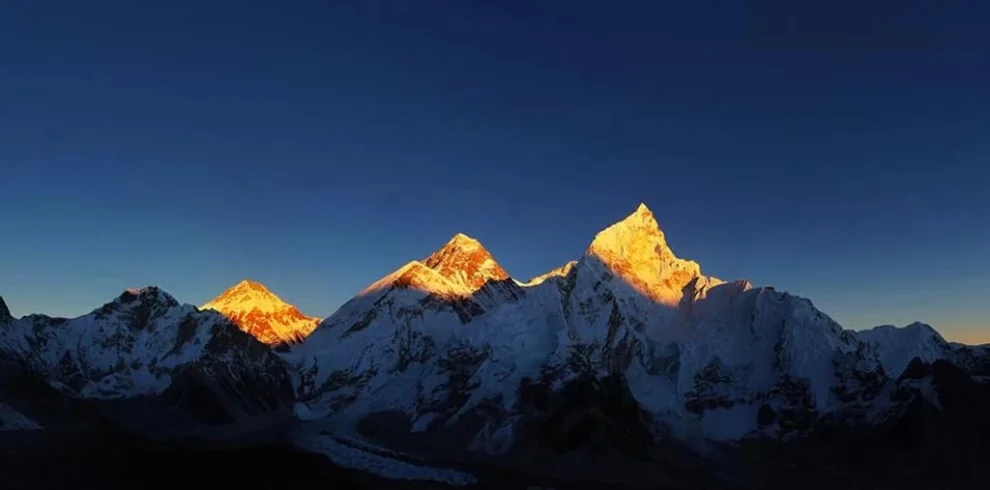
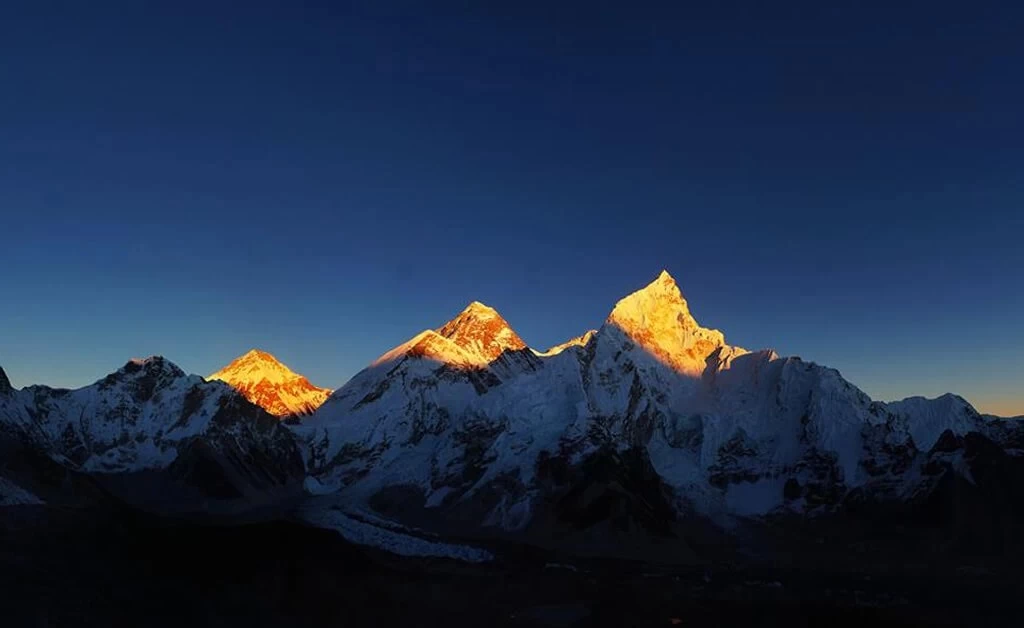
The 14-Day EBC Trek is one of the best hikes in the world, and we are offering the Everest Trek Package at a very affordable cost. Everest Base Camp Trek is one of the most well-known treks in the world. During the 14-day Everest Trek, you will experience amazing mountain views, get glimpses of the Sherpa people and Sagarmatha National Park, and visit high-altitude Buddhist monasteries.
The Everest Base Camp Trek package is among the best-selling trekking packages provided by Green Valley Nepal Treks. We are always focusing on providing Everest Base Camp trips to our clients with the best cost and quality services. We prepared standard 14-day Everest Trek packages for beginner and regular trekkers with enough acclimatization days. If you are an exporter and have experience with high-altitude treks, we suggest you take a Rapid Everest Base Camp Trek. We pride ourselves on our team, and because of them, we got a 98% success rate. We assure you that our team will make it a success to bring your dream of truth to the Everest Base Camp.
We begin our Everest Base Camp Trek with the 35-minute scenic flight to Lukla with a small twin-otter plane from Kathmandu. On reaching Lukla airport, the Green Valley Nepal Treks trekking guide welcomes you and introduces you to the team members. After a short break and breakfast, we start our journey to Phakding. Crossing the highest Hillary Bridge and climbing uphill to reach Namche Bazaar itself, a glorious part of the Everest Base Camp Trek. During the Everest Base Camp Trek, our trail passes through many viewpoints, villages, monasteries, and glaciers to the foot of Mount Everest, which will provide one of the most remarkable experiences of your lifetime.
The 14 Days Everest Base Camp trip provides a magnificent taste of Tibetan culture at a high altitude, as well as wonderfully colored vistas of rhododendron woods and gigantic views of the Himalayas, including the world's tallest peak, Mt. Everest. After arriving in Kathmandu, the stunning venture begins at Lukla (2840 m) and continues to Phakding (2610 m), Namche Bazar (3440 m), Phortse Village (3810 m), Dingboche (4260 m), Duglha (4620 m), Lobuche (4190 m), Gorakshep (5140 m), Kalapatthar (5545 m), and up to Mt. Everest base camp (5364 m).
If you are curious about the altitudes of different landmarks on your trekking adventure, look no further than our comprehensive Everest Base Camp Trek Map. It provides detailed information to assist you in determining the best places to acclimate and allows you to strategically plan your itinerary. Whether you are scaling towering peaks or exploring scenic valleys, our map offers a wealth of knowledge on elevation levels. By consulting this invaluable resource, you can make informed decisions, ensuring a safer and more enjoyable journey. Discover the 14 Days Everest Base Camp Distance breakdown you will conquer, and embark on your trek with confidence and clarity.
Considering that you will have to climb up and down on an unsteady route for 14 days while carrying a bag that weighs at least 6 kg and spending, on average, 5 to 6 hours a day on foot. It will be necessary for you to begin increasing your strength and endurance a few months early. Make a schedule for your workout that includes walking up and down hills while wearing a backpack that is packed with 6 to 12 kg at least once every week.
Your legs and muscles will be better prepared for the hike with more hill training. It is crucial because your lungs cannot provide your muscles with enough oxygen at higher altitudes where there is less oxygen. Start working out, start weightlifting, and walk with your hefty rucksack to be fit if you want to successfully reach Base Camp and avoid upsetting fellow trekkers. Even professional climbers prepare themselves for a task like this beforehand.
At the same time, keep in mind that preparing for the 14-day trek to Everest Base Camp includes a significant amount of mental preparation. It is a tough path with a high degree of difficulty that lasts many days, even if the rank of the adventure cannot be compared to climbing Everest. Be ready for everyday occurrences, constantly changing weather, and the high likelihood of altitude sickness.
When you arrive in Kathmandu, our Airport Representative at the Tribhuwan International Airport will receive you. A private tourist vehicle will transport you to your hotel. You can either relax or meet us at our office to learn more about the 14 days Everest Trek details. You will spend your first night in Kathmandu at a hotel.
After breakfast, drive from the hotel to the domestic airport terminal in the early morning. The early morning sunshine on the snowcapped mountains is spectacular on the ride to Lukla. It will take around 40 minutes to arrive in Lukla at Tenzing-Hillary Airport, the Himalayan entryway. The hike begins shortly after meeting our staff at the airport, from where Phakding is a short walk. You will relax at Phakding because it is the first day of the Everest Base Camp Trek Itinerary.
The trip begins in Phakding after breakfast and travels through lovely pine trees, the Dudh Koshi River, and views of Mount Thamserku. You will arrive at a checkpoint, the entrance to Sagarmatha National Park, after traveling through a few communities. You will continue walking via the Dudh Koshi River and Bhote Koshi River confluences before ascending steeply to Namche Bazaar, where you will be greeted by the magnificent Mount Everest and the ridges of Mount Lhotse (8,516m/ 27,939ft) and Mount Nuptse (7,861m/ 25,790ft).
Namche Bazaar, the largest village in the Khumbu area, has ATMs, Internet cafés, restaurants, bakeries, and other amenities. As per your 14-day Everest trekking itinerary, today will be your acclimatization day, which you can utilize by doing a short trek to a nearby viewpoint (Everest View Hotel, Thamo, and Khunde) and taking a tour of the area, including the Tourist Visitor Center, where you will learn about Everest climbers, Sherpa culture, and the flora and wildlife of the region
The trek to Tengboche is dusty and winding, but the panoramic views from the monastery make it all worthwhile. There aren't many hard ascents and descents, there's plenty of time to focus on photography. Photographing stupas (Buddhist temples), prayer flags, Mani walls (Walls with Buddhist Prayers Engraved onto Them), mountains like Ama Dablam (6,812 m), and Tengboche Monastery are all worthwhile endeavors.
The trek from Tengboche to Dingboche begins with a visit to the region's oldest Buddhist monastery. The trek continues through alpine woods to Upper Pangboche, a big settlement, and then past Shomare, Orsho, and Tsuro Wog villages. While traveling through the Khumbila Khola valley to the ridge top, one may enjoy breathtaking views of the rising mountains of Taboche (6,495m/ 21,309ft), Mount Thamserku (6,608m/ 21,679ft), Mount Ama Dablam (6812m/ 22,349ft), Mount Nuptse (7,861m/ 25,790ft), Mount Cholatse (6,440m/ 21,128ft), and Mount Lhotse (8,516m/ 27,939ft), among others. Dingboche is ultimately reached after continuing up the path past Imja Khola.
Because of the higher altitude, today is your second acclimatization day as per the EBC trek itinerary of 14 days. You will be rewarded with a spectacular view, but you will need to get some rest in order to complete the final leg of your adventure. On this day, you might choose to visit Dingboche and the surrounding villages of Chhukung and Imja or take a rest for the next hike. Short hikes can be done in a variety of ways. Nagarjun Hill (2,128m/ 6981ft), and Chhukung Ri (5,546m/ 18,195ft) are all possible hikes. The top of Nagarjun Hill provides views of Mt. Makalu, Mt. Lobuche, Thamserku, Ama Dablam, and other peaks.
The trek begins with a climb through the Khumbu Khola valley to Duglha. As you get closer to Dusa, the valley begins to shrink. The route is difficult, with various massive boulders and mountain yaks going by at a high height nearby. Many memorials with praying flags and stones in remembrance of climbers who died on the way to Mt. Everest may also be found. You will then arrive at the path that connects Gokyo Lakes and Cho-La Pass. Peaks like Khumbuste (6,636m/ 21,771ft), Lingtren (6,749m/ 22,142ft), and Pumori (7,161m/ 23,494ft) may also be seen. In a usual hike towards Lobuche, you might easily become fatigued walking across the mountainous terrain. Only a few residences exist in Lobuche
You will walk to Gorakshep after breakfast in Lobuche. This is going to be the finest day of 14 day Everest base camp trek as you will finally reach the base camp. It will take between two and three hours. After that, you will stop at Gorakshep for lunch. You will begin your journey to Mt. Everest Base Camp after lunch. It will take roughly 3 to 4 hours to go to Everest Base Camp from Gorakshep. Everest Base Camp is breathtaking. From the base camp, you will get spectacular views of the Nuptse, Khumbuste, and Pumori peaks. You will hike back to Gorakshep, where you will spend the night, after taking in the scenery.
You will start your hike considerably earlier than usual since you want to be at Kalapatthar before sunrise to take in the breathtaking sunrise panorama from Kalapatthar. Faced with the problems of thin air, you will take the scenic route to Kalapatthar, with views of Lingtren, Khumbutse, and other peaks. You will take in a close-up look at Everest and the spectacular dawn before returning to Gorakshep for breakfast. You will end this day by trekking down to Pangboche, where you can see the oldest monastery in the region, which contains the scalp and bones of a Yeti.
From Pangboche the route descends to the riverbank to pass the Imja Khola Bridge and then continues to Tengboche. The Dudh Koshi River is reached after a long descent from Tengboche. We cross the Dudh Khoshi River on a suspension bridge on our way to Phungi Thanga. To go to Namche Bazaar, we pass via the villages of Tashinga and Sanasa. Then, to reach Namche Bazaar (3440m/ 11,286ft), gently pass the gorgeous scenery and the Larja Dobhan.
The steep descending route continues on the final day of the expedition. Trekkers must travel slowly, steadily, and in a balanced way over the steep rocky terrain till they reach the Dudh Koshi suspension bridge, passing through the wide plain and rhododendron woodland while taking in the distant vista of snow-capped mountains. Take a last glance at the beautiful Himalayan Mountains and bid farewell to the Khumbu Valley and Mount Everest in the early hours of the day.
This is the day that the mountain flight from Lukla is once again appreciated. When you get in Kathmandu, you may go shopping and take a stroll around the city. The evening is intended to commemorate the accomplishment of the Everest Base Camp trek.
There are many possibilities! It will take 12 days to get from Lukla to Lukla if you use the standard and most common route. The number of days required to visit Gokyo Lake or the Three Passes varies between 14 and 16. It will take 18 to 20 days if you trek in from Jiri and fly out from Lukla.
You will immediately notice the difference in air temperature when you arrive at Lukla. The temperature will have fallen when you reach Dingboche (above Namche Bazaar). The higher you get, the more you'll be able to feel chilly weather. Temperatures can drop below -20 degrees Celsius at night during the winter.
The optimum time to go to Everest Base Camp is based on the activities you want to undertake there. Trekking is best done in the spring (March-May) or fall (October-November), whereas a helicopter trip may be done at any time outside of the rainy season. Winter isn't out of the question, though; if you're prepared for the cold, you'll be rewarded with stunning mountain vistas
To trek to Everest Base Camp, you don't need any technical knowledge or climbing abilities. Be advised that this is a hike, not a climb. There are no high passes to traverse, either. However, there is the issue of altitude to consider, and you must properly acclimate. This will be accomplished if you hike with a knowledgeable guide. If you're going solo, keep an eye on your health and take it gently.
Since 2010, the Everest Region has had 3G access. It does not, however, operate in all situations. You will not obtain service in various regions of Gokyo and the Thame Valley.
Yes! Courtesy to the Everest Link company, WIFI is available at Everest Base Camp and over 200 hotspots along the way
Yes. Many beginners complete it successfully with basic fitness, proper acclimatization, and a steady pace. Training in advance improves comfort and safety.
Spring (March–May) and autumn (September–November) are ideal, offering clear skies, mild temperatures, and stunning views of Everest.
Yes, 6 to 8 weeks of cardio, hiking, and strength training is recommended to prepare your body for long days at altitude.
Trek slowly, stay hydrated, and take acclimatization days as planned. Avoid alcohol and heavy exertion during the first days.
Yes. It should cover high-altitude trekking and helicopter evacuation in case of emergencies on the trail. Know More:
The one-way distance is about 65 km (40 miles), taking around 8 days to reach and 4 days to return.
Most trekking days involve 5–7 hours of walking, with shorter days during acclimatization stops.
Approximately 130 km (80 miles) round trip, including side hikes for acclimatization.
Most trekkers first spot Everest from Namche Bazaar on day two, though the clearest views come higher up.
Yes. Many trekking agencies offer flexible itineraries to match your pace, rest days, and preferred experiences.
Very busy in spring and autumn, with many trekkers, guides, and porters along the route.
Basic teahouses with twin beds, shared toilets, and a common dining area are provided throughout the route.
Teahouses serve rice, noodles, vegetables, eggs, pasta, soups, and Dal Bhat. Snacks and drinks are available for purchase.
Yes. All teahouses offer vegetarian options, though menus may be limited at higher altitudes.
Toilets are mostly shared and basic. Hot showers are available in most teahouses for an extra fee.
Yes, in many teahouses for a small fee, though speeds can be slow at higher altitudes.
Yes, most teahouses offer charging for a small fee. Bring spare batteries or a power bank.
Only works on Trip page.
Ut enim ad minim veniam, quis nostrud exercitation ullamco laboris nisi ut aliquip ex ea commodo consequat. Duis aute irure dolor in reprehenderit in